

When Is Whole Life Insurance A Worthwhile Investment?
Whole life insurance is the right type of life insurance under the following circumstances:
- End-of-life costs: If you need life insurance to cover your final costs, then a whole life final expense policy is the best solution.
- Death taxes: Very high-net-worth families with an estate valued at 15 million or more will be subject to death taxes. The death benefit from the whole life policy will be used by your heirs to pay the death tax. While the policy has a cost, it will be significantly less than the death taxes.
- Supplement retirement: Participating whole life policies pay cash dividends, which can be a means to augment your retirement income. Also, if you’ve maxed out your retirement accounts and need alternative financial tools to supplement retirement, whole life coverage can be a good solution.
- Lifelong dependent who relies on your income: Let’s say you have a spouse or child (with or without a disability) who relies on your income for their way of life. Given that they will always need your income, a whole life policy, being permanent in nature, is the ideal way to ensure the death benefit helps them continue their lifestyle when your income is gone.
- Reduced bills in retirement while still having life insurance: Limited-pay whole life policies allow the possibility of paid-up life insurance, which means you no longer have to make premium payments. This can be especially helpful during retirement since income typically drops compared to your working years.
- Life insurance for children: Those who want to buy life insurance for a child should opt for a whole life policy, ensuring the child has permanent coverage with a guaranteed rate. Furthermore, it’s best to opt for a 10-pay or 20-pay so that you can pay off the policy. This will guarantee the coverage remains in force forever without requiring the child to pay premiums for it when they become an adult.
- Very unhealthy applicants who need life insurance: Those with very risky pre-existing conditions are usually unable to qualify for term or universal life insurance. Many whole life policies with ultra-lenient underwriting accept high-risk applicants. There are even guaranteed issue whole life policies that ask no health questions and require no medical exam. Those are accessible to everyone regardless of their health history.
- Only need a small amount of coverage: Traditional life insurance policies usually require you to buy $50,000 of coverage or more. Many insurers offer whole life policies with a minimum coverage of $2,000.
- Permanent coverage with a fixed price: For those on a fixed income who want coverage that lasts forever with a stable premium, whole life coverage is the optimal solution.
When Is Whole Life Insurance Not Worth It?
There are many scenarios in which whole life insurance is not worth it. Here are most of these real-world use cases:
- Covering debts: If you need life insurance to cover a mortgage, car note, or other financial debt, whole life insurance would be a bad investment. Instead, you should opt for a term life policy with a term length that matches the duration of your debt(s).
- Replacement of income for primary breadwinners: If you’re the primary income earner of your household and have non-adult children who rely on you, life insurance is a must-have. Whole life insurance wouldn’t be worth it, since it’s very costly and you’re unlikely to get as much coverage as you would truly need. Instead, term life would be far superior, as it would let you get much more coverage at a reasonable price. Plus, having dependent children relying on you is a temporary scenario. At some point, they will be adults, leave the home, and no longer be reliant on your income. It would not make sense to buy a permanent whole life policy to solve a problem that will end within 10-20 years when the children are adults.
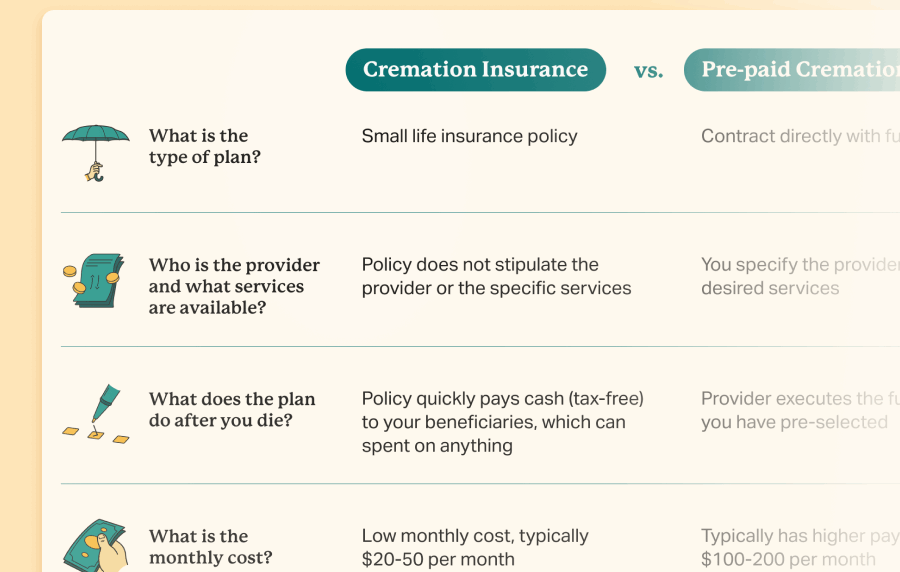
- Over age 80: Nearly all life insurance options over age 80 are whole life. While there are many legitimate reasons why whole life insurance makes sense at this age, you could run into a scenario where it’s just cost-prohibitive. The rates at this age range (which are especially high if you have a lot of health issues) can sometimes be so much that it makes more sense to A) put the money in a savings account or B) invest in a pre-paid burial plan if your goal is to cover your end-of-life costs.
How Does Whole Life Insurance Work?
Whole life insurance is permanent life insurance with the following guarantees: premiums will not increase, the death benefit will not decrease, and the coverage lasts indefinitely.
Another defining attribute of whole life coverage is that it will accumulate cash value on a tax-deferred basis. Cash value is similar to a behind-the-scenes savings account. Every premium payment gets a portion of it redirected to the cash value account. Plus, it earns interest; typically 3-4%.
You can withdraw the cash value at any time and spend it however you’d like. Please note, however, that withdrawing funds from the cash value account will be considered a loan against the policy.
You’re not required to pay back policy loans, but be mindful of the fact that outstanding loans will reduce your death benefit. For example, if you have a $1,000,000 life insurance policy and a $100,000 loan, the insurer will only pay $900,000 to your beneficiaries.
Pros & Cons Of Whole Life Insurance
- Fixed premiums.
- Lifelong coverage.
- The death benefit cannot decrease.
- Guaranteed rate of cash value growth that accumulates on a tax-deferred basis and at a predictable rate.
- Potential for dividends paid as cash or can be used to increase the death benefit.
- Very limited coverage is available (as low as $1,000).
- Virtually every insurer offers whole life insurance.
- Limited pay options are available to one day have paid-up life insurance coverage.
- Cash value grows tax-deferred and can be accessed at any time and spent however you wish.
- It’s the most expensive type of life insurance.
- Cash value growth is inferior to true investment products such as index funds or mutual funds.
- Cash value growth often takes years to accumulate a meaningful amount.
- Benefits don’t get the cash value when you die. Rather, they only get the death benefit.
- There may be tax implications when withdrawing the cash value. However, it’s very unlikely to occur.
Whole Life Insurance Vs Term Life Vs Universal Life
| Policy Features | Term Life Insurance | Whole Life Insurance | Universal Life Insurance |
|---|---|---|---|
| Length of coverage | Usually 10, 20 or 30 years | Forever | Forever |
| Fixed premiums | Often yes, but sometimes premiums increase over time | Yes | Yes & no |
| Affordability | Lowest cost | 2-20x more than term coverage | Always costs 2-5x more than term coverage |
| Guaranteed death benefit payout | Yes | Yes | Yes |
| Builds cash value | No | Yes | Yes |
| Cash surrender value | No | Yes | Yes |
| Policy loans | No | Yes | Yes |
| Potential payout of dividends | No | Yes | Yes |
| Medical exam required | Sometimes | Sometimes | Sometimes |
| Ideal reasons to buy | Temporary needs such as covering a mortgage or replacing income | Permanent needs such as paying for your final expenses | Permanent needs such as estate planning or supplemental income for a surviving spouse |
- Nationally licensed life insurance agent with over 16 years of experience.
- Personal annual production that puts him in the top .001% out of all life insurance agents in the nation.
Anthony Martin is a nationally licensed insurance expert with over 16 years of experience and has personally served over 10,000 clients with their life insurance needs. He frequently authors entrepreneurial and life insurance content for Forbes, Inc.com, Newsweek, Kiplinger, and Entreprenuer.com. Anthony has been consulted as an expert life insurance source for dozens of high-profile websites such as Forbes, Bankrate, Reuters, Fox Business, CNBC, Investopedia, Insurance.com, Yahoo Finance, and many more.
- Nationally licensed life insurance agent with over 20 years of experience
- Best selling Amazon author.
Jeff Root is a nationally licensed life insurance expert with over 20 years of experience. He has personally helped over 3000 clients with their life insurance needs. Jeff is a best-selling Amazon author and the managing partner of a highly successful insurance brokerage that manages over 2,500 licensed insurance agents across the USA. He has been a featured life insurance source for prestigious websites such as Forbes, Bloomberg, MarketWatch, Nerdwallet, and many more.
- Nationally licensed life insurance agent with over 15 years of experience
- Best selling Amazon author of five insurance sales books.
David Duford is a nationally licensed insurance expert with over 15 years of experience. He has personally helped more than 1,500 clients buy life insurance. David has been featured as an expert source for highly authoritative publications such as A.M. Best and Insurancenewsnet. He also runs one of the largest YouTube channels to help aspiring insurance agents serve their clients better.
- Nationally licensed life insurance agent with over 20 years of experience
- Best selling Amazon author.
Jeff Root is a nationally licensed life insurance expert with over 20 years of experience. He has personally helped over 3000 clients with their life insurance needs. Jeff is a best-selling Amazon author and the managing partner of a highly successful insurance brokerage that manages over 2,500 licensed insurance agents across the USA. He has been a featured life insurance source for prestigious websites such as Forbes, Bloomberg, MarketWatch, Nerdwallet, and many more.
- Nationally licensed life insurance agent with over 15 years of experience
- Best selling Amazon author of five insurance sales books.
David Duford is a nationally licensed insurance expert with over 15 years of experience. He has personally helped more than 1,500 clients buy life insurance. David has been featured as an expert source for highly authoritative publications such as A.M. Best and Insurancenewsnet. He also runs one of the largest YouTube channels to help aspiring insurance agents serve their clients better.
Choice Mutual often cites third-party websites to provide context and verification for specific claims made in our work. We only link to authoritative websites that provide accurate information. You can learn more about our editorial standards, which guide our mission of delivering factual and impartial content.
-
15 million or more. https://www.irs.gov/businesses/small-businesses-self-employed/estate-tax