

How Does Life Insurance Work?
A life insurance policy is a legal contract in which the insurance company agrees to pay a “death benefit” upon the insured’s death in exchange for the insured paying a defined premium on a regular basis.
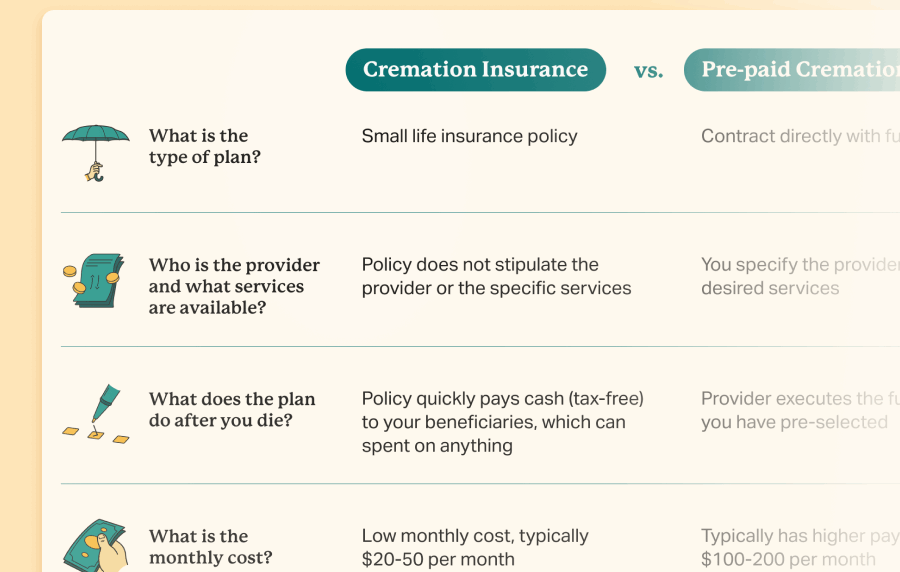
The payout is always cash and tax-free, and can be spent on anything. Furthermore, your beneficiaries own the money, so not only can they spend it as they wish, but they also keep any funds they don’t use.
The cost and fine print vary by policy type, coverage amount, and the insured’s details (such as age and gender).
When Life Insurance Is Worth It
Life insurance is particularly worthwhile and useful in the following situations:
- Pay off a mortgage: Life insurance is often purchased with the specific intent of paying off a mortgage, so the surviving loved ones have peace of mind knowing they have a secure home.
- Pay off other financial debts: Car notes, personal loans, or credit card balances can be paid off with the proceeds from the life insurance policy.
- Replace your salary: If there is any person in your life who relies on your income to support their lifestyle, you need life insurance immediately. Your death will cause your income to stop. Those who rely on your income will not be able to pay for food, rent, utilities, clothing, and much more. The life insurance payout replaces your future income, so your dependents aren’t in a catastrophic financial position.
- Money to raise children into adulthood: A recent report by Lendingtree notes that the average cost to raise a single child is approximately $303,000 over 18 years. Your dependent children need your income for their entire existence. Life insurance is a non-negotiable necessity if you have non-adult children.
- Cover children’s future college expenses: If you plan to help your children with college expenses, life insurance will ensure you do so even if you die prematurely.
- Final expenses: Funerals are one of the most expensive costs in a person’s life. The average funeral often costs over $10,000. When you die, your loved ones will want to honor you and will likely incur debt to pay for your funeral if you have no means to do so. Covering funeral expenses is the number one reason people buy life insurance, according to a recent LIMRA study.
- Leave a legacy: Many people buy life insurance to leave as a legacy gift to their loved ones.
- Business continuation: Business partners often have life insurance on every shareholder. When a key person dies, it usually results in lost income for the company. The life insurance policy proceeds bridge this gap, allowing the existing shareholders to adjust to the new reality.
- Divorce decree: It’s common for a divorce settlement to require a spouse who owes alimony to buy life insurance on their own life. They must name their ex-spouse as the beneficiary, so that if they die, the life insurance payout will cover the expected alimony payments.
- Caring for an adult dependent: If you have an adult child or other loved one who relies on your income, your death will severely damage their ability to pay critical living expenses. A life insurance policy will ensure that your death will allow them to continue living.
- Special needs dependent: Parents who have special needs children that require constant care often purchase life insurance. That way, the policy proceeds can fund care for their special needs child in their absence.
- Supplement retirement: It’s not uncommon for retirement income to decrease after the death of the primary retiree. If that’s your situation, get life insurance to ensure the proceeds help bridge the gap, so your surviving spouse isn’t critically harmed financially by your death and subsequent reduction in pension income.
- Debt co-signers: Those who take out a loan with a cosigner often have life insurance on both parties. That way if one dies, the other is not left paying the entire debt balance.
- Estate taxes: Individuals with estates worth $15 million or married couples with estates worth $30 million will be subject to a federal estate tax. If the estate value exceeds those thresholds, the surplus is subject to a death tax with a top marginal rate of 40%. Some states also have estate taxes, which would be due in addition to the federal taxes. High-net-worth families frequently use life insurance to offset anticipated estate taxes. Essentially, the policy’s death benefit is intended to equal or exceed the expected tax bill. Now, life insurance is not free, but the logic goes something like this to justify the premiums: the total life insurance cost is less (usually significantly less) than the tax bill.
If you find yourself in one of these circumstances, life insurance is well worth the cost.
When Life Insurance Is Not Worth It
You don’t need life insurance, and it likely would not be a worthwhile way to spend your money if any of the following circumstances apply to you:
- You have zero dependents: If your death will financially harm nobody, then you don’t need life insurance. It would be a waste of money (unless you want to gift the proceeds to someone or an organization such as a charity).
- There is a 2-year waiting period, and you’re in poor health:
- You have a large amount of liquid capital: If you’re fortunate enough to have millions of dollars in cash or investments, then you don’t need life insurance. Your savings could pay for your dependents (if you have any), debts, and final expenses.
- Healthy retirement income that won’t decrease: Some retirees have income that exceeds their budgetary needs and won’t decrease due to death. This means that any surviving dependents, such as a spouse, will be unaffected financially by your death and thus don’t need life insurance.
- Your group life insurance is enough: While group term life insurance through an employer is rarely enough, it can be. If so, you don’t need a separate life insurance policy per se. However, keep in mind that group life insurance policies are rarely portable, which means that if you leave your job, your life insurance coverage would terminate. On that basis, it’s usually wise (but not necessarily essential) to have a policy that you buy on your own.
- Seniors over 85:
The Different Types Of Life Insurance And How They Work
There are multiple types of life insurance, each with varying costs, terms, and conditions. There are two basic types of life insurance: permanent (universal life or whole life) and temporary (term life insurance).
Whole life insurance
Whole life insurance offers lifelong protection with a guaranteed rate that will not increase, and the death benefit won’t decrease. Also, it builds cash value on a tax-deferred basis. Without question, whole life insurance costs more than all other types of life insurance.
Is whole life insurance worth it?
Whole life insurance is worth it only if you need coverage for a permanent need and you value guarantees. For example, whole life insurance is ideal for paying funeral expenses, estate taxes, or leaving a financial legacy to a loved one.
Universal life insurance
Universal life policies offer permanent coverage, cash value growth, and a predictable rate. Where universal life policies differ from whole life is that the premium can be adjusted up or down.
Also, if you withdraw too much cash value, the insurance company may request a large payment from you to keep the policy in force (this is not possible with whole life). Lastly, universal life policies will always cost less than whole life.
Is universal life insurance worth it?
Universal life insurance is worth it only if you need lifelong coverage and value flexibility with premiums, cash value growth, and cash value withdrawals. For example, if you need life insurance to help provide care for a disabled child after you’re gone, universal life is the ideal option.
Term life insurance
Term life coverage is temporary. You’re renting the policy for a specific period of time. Most term policies last 10, 20, or 30 years, but some may last until a certain age, such as 80 or 85. When a term life policy expires, you’re no longer insured, and the insurance company keeps the premiums you’ve paid. Because the policy expires, the cost is low (much lower than all other types).
Is term life insurance worth it?
Term life insurance is only worth it if you need coverage for a limited period of time. Most commonly, term life is bought to pay off a mortgage or other debts or to replace income so surviving dependents can continue their way of life.
How Much Does Life Insurance Cost?
Life insurance rates can range from $8 per month to $1,000. Prices vary based on multiple factors, such as gender, age, policy type, coverage amount, and health history. Below are some sample prices for term life and whole life insurance policies.
10-year term rates
20-year term rates
30-year term rates
Whole life insurance rates
What Reasons Will A Life Insurance Policy Not Pay Out?
There are many reasons why a life insurance policy may not pay out, thus making it not worth the cost. Below are the most common reasons.
A waiting period
Some policies, such as guaranteed issue life insurance, have a 2-year waiting period. If you die during the waiting period, the life insurance policy will not pay out. Instead, the insurer will only refund the premiums paid.
Lapsed
You’re required to pay regular premiums to keep your policy active. If you fail to make a payment for 30 days, the policy will lapse, and coverage will terminate. If you die after a policy has lapsed (even if just one day late), there will be no payout.
Health misrepresentation
All life insurance policies contain an incontestability clause. It grants the insurer the legal right to investigate before paying any claim for a death that occurs within the first two years. The insurance company will order your medical records.
If they find anything you failed to disclose that would have caused them to deny your application, they will not pay the claim. However, if they don’t find any discrepancies, they will pay the full claim.
Expired term life insurance
Term life insurance terminates after a defined period of time. If you die after the policy has ended, there will be no payout.
Fraud
If someone takes out a life insurance policy on another person under fraudulent terms and the insurer learns of it, they will deny the claim. Fraud could include impersonating someone else, forging a signature, or intentionally omitting critical information from the application.
Criminal activity
If you die during the commission of a crime, expect your life insurance claim to be denied.
What Does Life Insurance Not Cover?
A life insurance policy covers the insured’s life for a specified amount (the death benefit). A life policy with no riders will not cover:
- Medical expenses: Only health insurance products will pay money for medical expenses, not life insurance.
- Long-term care: Care in a long-term care facility is not covered by life insurance unless you specifically have a “long-term care rider”.
- Disability: If you go on disability, a life insurance policy will not pay you money to cover your lost income. The only exception to this rule would be if you had a life insurance policy with a “disability income rider.” With that rider, then yes, you would get money paid to you because of disability.
- Accidents: Auto or other accidents will not result in a payout from a life insurance policy. Only an Accidental Death and Dismember policy would pay money out for accidents.
- Critical illness: Critical illnesses typically include heart attack, stroke, or cancer, all of which will not result in a monetary payout from a life insurance policy. Instead, you would need a “critical illness policy,” which is completely separate from a life insurance policy. Also, many life insurance policies allow you to add a critical illness rider, which would trigger a payout for these events.
- Nationally licensed life insurance agent with over 16 years of experience.
- Personal annual production that puts him in the top .001% out of all life insurance agents in the nation.
Anthony Martin is a nationally licensed insurance expert with over 16 years of experience and has personally served over 10,000 clients with their life insurance needs. He frequently authors entrepreneurial and life insurance content for Forbes, Inc.com, Newsweek, Kiplinger, and Entreprenuer.com. Anthony has been consulted as an expert life insurance source for dozens of high-profile websites such as Forbes, Bankrate, Reuters, Fox Business, CNBC, Investopedia, Insurance.com, Yahoo Finance, and many more.
- Nationally licensed life insurance agent with over 20 years of experience
- Best selling Amazon author.
Jeff Root is a nationally licensed life insurance expert with over 20 years of experience. He has personally helped over 3000 clients with their life insurance needs. Jeff is a best-selling Amazon author and the managing partner of a highly successful insurance brokerage that manages over 2,500 licensed insurance agents across the USA. He has been a featured life insurance source for prestigious websites such as Forbes, Bloomberg, MarketWatch, Nerdwallet, and many more.
- Nationally licensed life insurance agent with over 15 years of experience
- Best selling Amazon author of five insurance sales books.
David Duford is a nationally licensed insurance expert with over 15 years of experience. He has personally helped more than 1,500 clients buy life insurance. David has been featured as an expert source for highly authoritative publications such as A.M. Best and Insurancenewsnet. He also runs one of the largest YouTube channels to help aspiring insurance agents serve their clients better.
- Nationally licensed life insurance agent with over 20 years of experience
- Best selling Amazon author.
Jeff Root is a nationally licensed life insurance expert with over 20 years of experience. He has personally helped over 3000 clients with their life insurance needs. Jeff is a best-selling Amazon author and the managing partner of a highly successful insurance brokerage that manages over 2,500 licensed insurance agents across the USA. He has been a featured life insurance source for prestigious websites such as Forbes, Bloomberg, MarketWatch, Nerdwallet, and many more.
- Nationally licensed life insurance agent with over 15 years of experience
- Best selling Amazon author of five insurance sales books.
David Duford is a nationally licensed insurance expert with over 15 years of experience. He has personally helped more than 1,500 clients buy life insurance. David has been featured as an expert source for highly authoritative publications such as A.M. Best and Insurancenewsnet. He also runs one of the largest YouTube channels to help aspiring insurance agents serve their clients better.
Choice Mutual often cites third-party websites to provide context and verification for specific claims made in our work. We only link to authoritative websites that provide accurate information. You can learn more about our editorial standards, which guide our mission of delivering factual and impartial content.
-
report by Lendingtree. https://www.lendingtree.com/debt-consolidation/raising-a-child-study/
-
LIMRA study. https://www.limra.com/siteassets/newsroom/liam/2025/2025_facts_about_life_insurance.pdf
-
estate tax. https://www.usbank.com/wealth-management/financial-perspectives/trust-and-estate-planning/estate-taxes.html
-
top marginal rate of 40%. https://taxfoundation.org/data/all/state/estate-inheritance-taxes/
-
incontestability clause. https://www.investopedia.com/terms/i/incontestability-clause.asp
-
riders. https://www.nationwide.com/lc/resources/investing-and-retirement/articles/what-is-a-life-insurance-rider