Aging-In-Place Statistics At A Glance
Most older Americans have their minds set on staying in their own homes as long as possible. While COVID-19 and the rising costs of assisted living facilities play a role, seniors value their independence above all.
- 8 in 10 older adults currently live independently in their own homes. (Source)
- The cost to live in an assisted living community is about $64,200 per year ($5,350 monthly). (Source)
- Over 60% of seniors say they have an emotional attachment to their home. (Source)
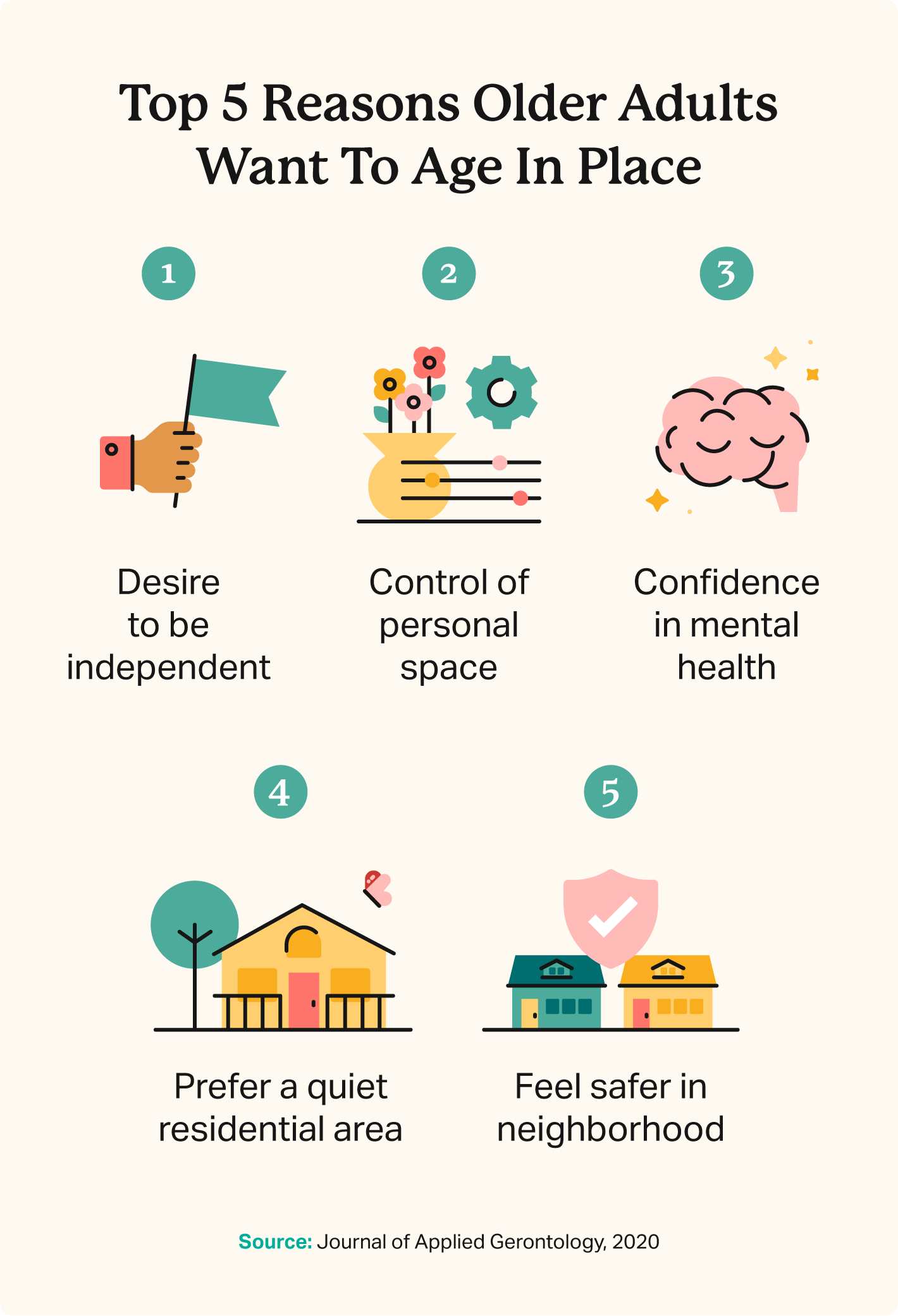
- 40% of seniors said “independence” is the most important benefit of staying in their home. (Source)
- Nearly three-quarters (72%) of low- to moderate-income seniors report having a chronic illness. (Source)
COVID-19 influence
- 7 in 10 older adults preferred staying in their community rather than moving during the COVID-19 pandemic (Source)
- In response to public health orders to stay home, more older adults began using technology for social connection. (Source)
- More than three-quarters (76%) of adults ages 50 and over saw the importance of high-speed internet. (Source)
- 19% of U.S. adults aged 65+ reported either using up most or all of their savings or losing their source of income as a result of the coronavirus pandemic. (Source)
- 19% of aged 65+ older adults in the U.S. reported financial hardship during COVID-19, compared to just 10% in the U.K. (Source)
- Half of older adults said the pandemic made them more willing to live at home for the rest of their lives.
Caregiver support and impact
- 20% of Americans are family caregivers. (Source)
- Caregivers living with their recipients spend over 37 hours per week on caregiving duties. (Source)
- Caregivers provide an estimated $873 billion of free labor per year. (Source)
- 2 in 10 Americans ages 70 and up say they can’t or find it difficult to live independently without help from caregivers. (Source)
- Aging-in-place services, like a caregiver, can cost as much as $4,000 per month. (Source)
Common Misconceptions Of Aging In Place
Growing older can be a taboo topic of discussion, with many assumptions and misunderstandings about senior living. Below, we clarify a few common myths about aging and offer reasons to have a positive outlook.
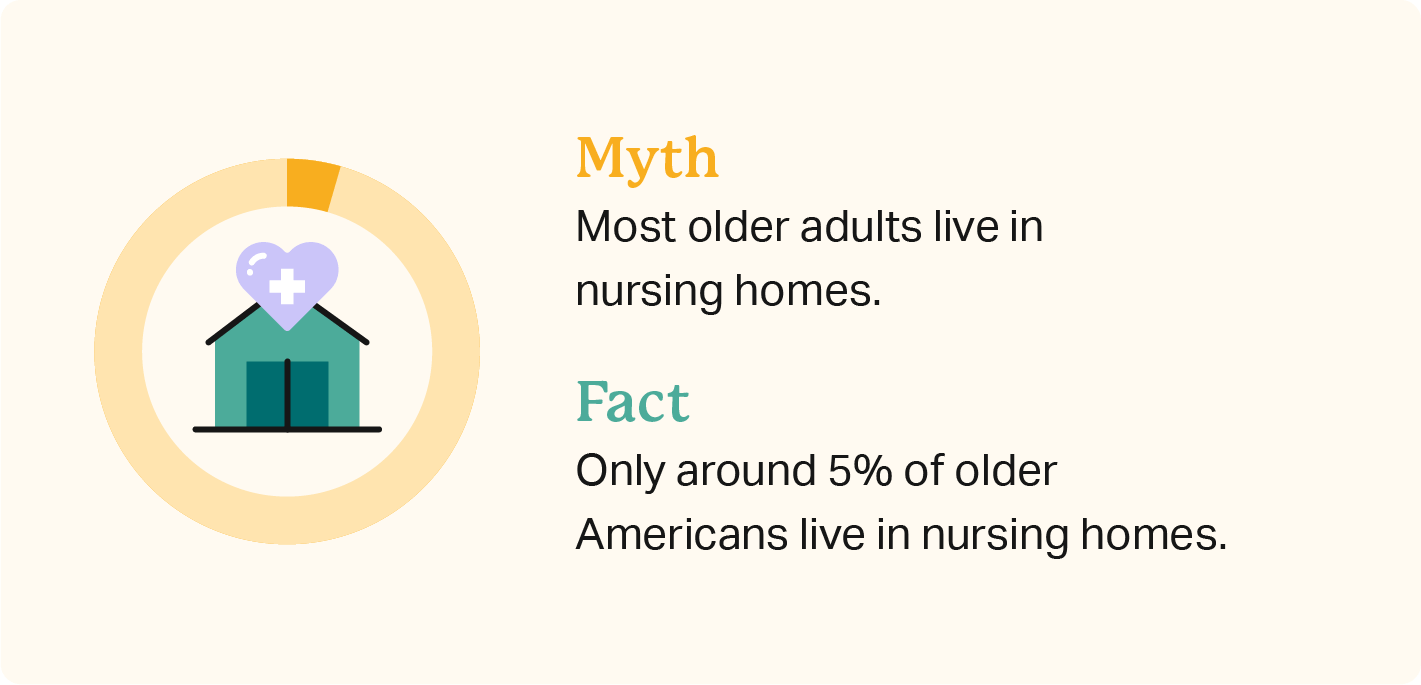
- While many people believe that most seniors live in nursing homes, only about 5% of older Americans actually do. (Source)
- Even with participation in community activities, up to 24% of community-dwelling older adults still experience social isolation. (Source)
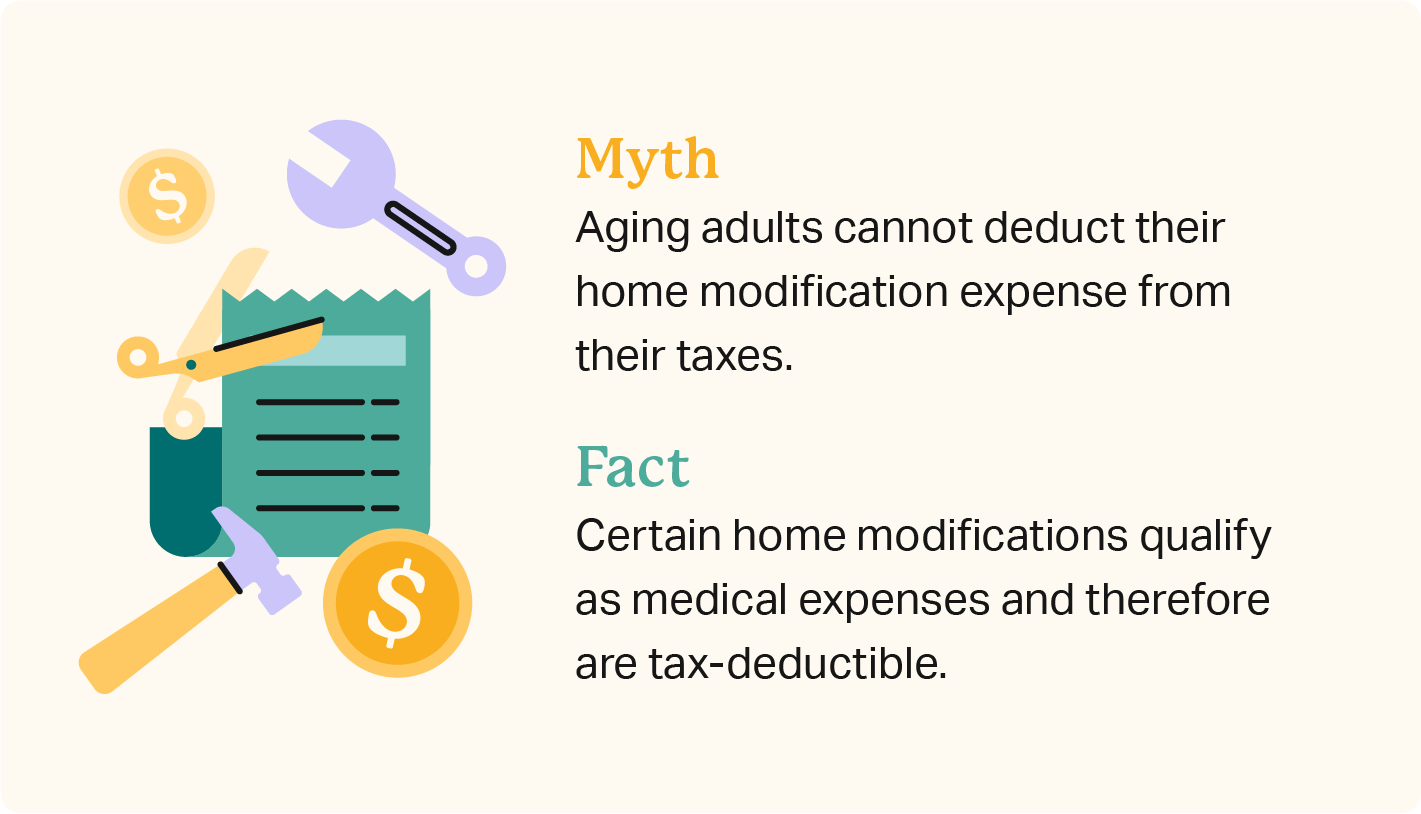
- While not all home modifications are tax-deductible, some upgrades that accommodate disabled and medical conditions qualify as medical expenses to the IRS. This makes them tax-deductible. (Source)
- Even when living alone, 77% of older adults maintain weekly contact with family, friends, or neighbors. (Source)
- Aging in place is not just about aging; it is about livability, comfort, and adapting your home, not only physical limitations. (Source)
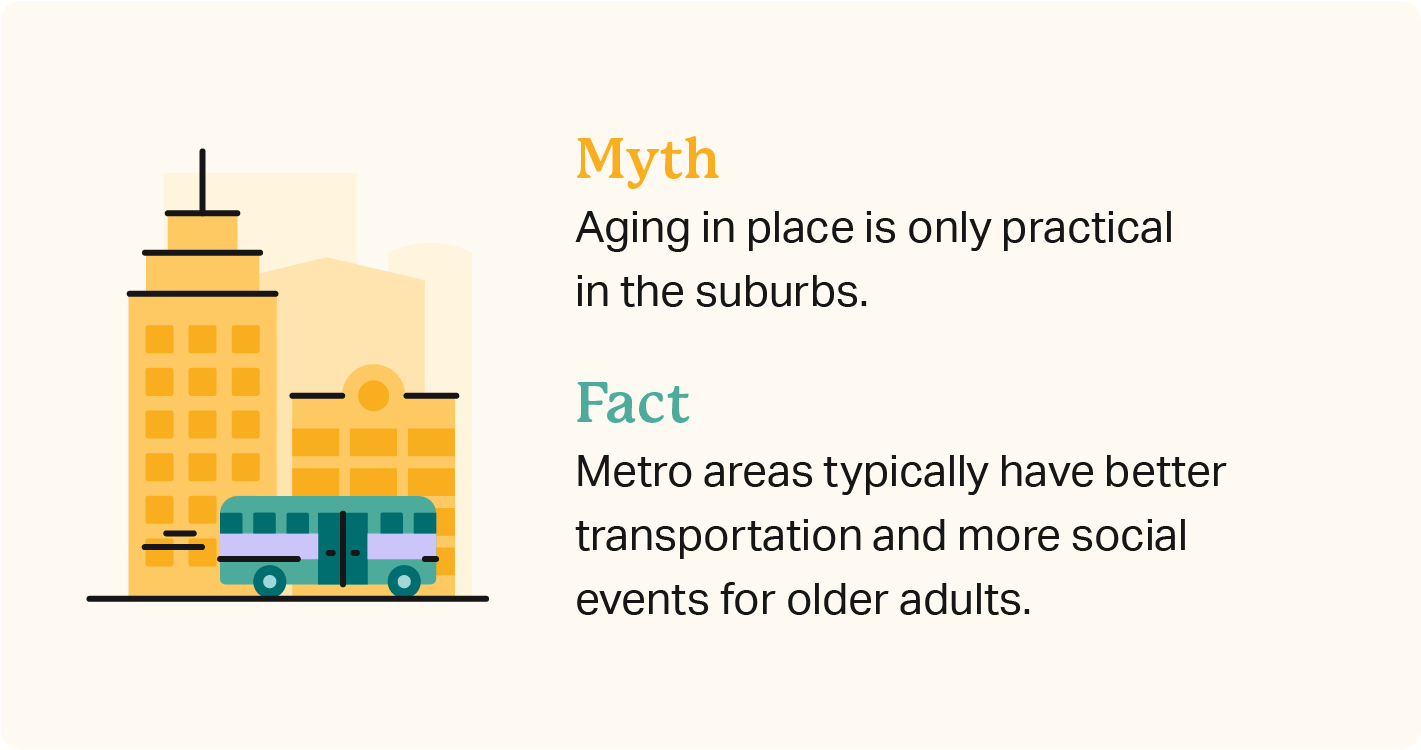
- Choosing to stay home as you age is ideal for metro areas rather than the suburbs. Big cities tend to have better public transportation and more social opportunities. (Source)
Benefits of aging in place
It’s understandable why senior citizens feel most comfortable staying in their own homes. Here are a few more reasons to support aging in place:
- Health and Safety: As more nursing homes experience overcrowding, there is greater exposure to illness and, therefore, a higher risk of infection.
- Independence: Older adults will still have some control over their daily routines and activities, creating more freedom and a sense of dignity. This is less likely in senior living communities, where residents depend more on staff.
- Sense of Familiarity: Remaining near one’s community provides security for many aging adults, where leaving their environment can create an emotional toll.
- Proximity to Loved Ones: It’s much easier to maintain a connection with family and friends in one’s home compared to the visitation restrictions of an assisted living facility.
- Affordability: Even with home modifications and hired aid, the overall costs of nursing homes and assisted living facilities remain higher.
Alternative state assistance
Remodeling a home is often essential for seniors to age safely and comfortably. Yet, only 18% of adults 50 and older have made modifications to help them do so. Below are statistics on the most common changes and how their costs compare to assisted living.
Aging-In-Place Remodeling
Remodeling a home can be costly, but it is often necessary for seniors to age in place safely and comfortably. Below are stats on popular modifications among older adults and the costs compared to assisted living facilities.
Trends
- Home modifications for accessibility can cost $10,000 to $100,000.
- Assisted living costs $45,000 per year, which, after a few short years, will far exceed the expenses of home remodeling.
- Over half (52%) of older adults who moved in the past five years chose a home that was easier to get around in. (Source)
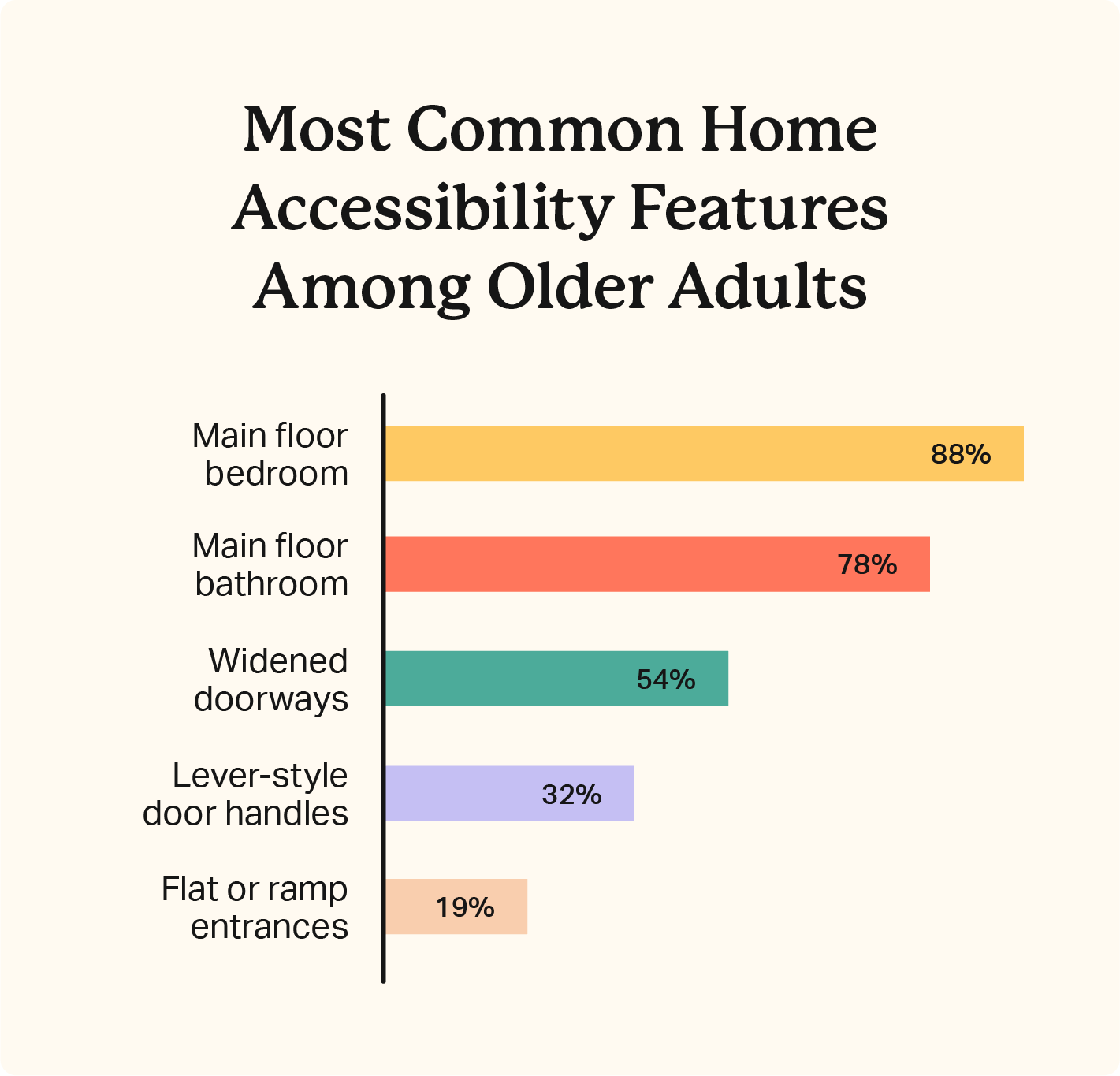
- The top two accessibility features among older adults are main floor bathrooms (88%) and main floor bedrooms (78%) (Source)
- Other common features include wider doorways (54%), lever-style door handles (32%), and entrances with ramps or no stairs (19%). (Source)
- Nearly half (49%) of older adults said they own at least one smart home device. (Source)
- The most popular smart technologies used by older adults include voice-controlled assistive devices (18%), smart thermostats (18%), and doorbell cameras (16%). (Source)
Preparedness
- 9 in 10 U.S. homes are not ready to accommodate aging adults. (Source)
- 85% of seniors planning to stay in their current homes don’t believe they’ll need significant home modifications
- About 1 in 5 (21%) older adults haven’t thought about modifications they’d need at home. (Source)
- Over three-quarters of seniors already have someone who can assist them with groceries, household chores, and managing finances. (Source)
- Nearly 80% of older adults said they’d need bathroom modifications such as grab bars and walk-in showers. (Source)
- Roughly one-fifth of seniors (21%) age 65 and older have paid off their mortgages. (Source)
How To Age In Place Comfortably
There are many options for aging-in-place solutions that provide independence while providing the support you need. Identifying the right care for your situation is key. Here are some practical ways and resources to help you prepare and enjoy your golden years.
1. Invest in home modifications for safety
Perform a home safety check to identify updates that can prevent falls and accidents, such as:
- Handrails on stairs and hallways
- Shower seats and bathroom grab bars
- Nonslip flooring or rugs
- Ramps or zero-step entrances for easier access
- Lever-style door handles instead of knobs
- Improved lighting, especially in hallways, kitchens, and bathrooms
Medical alert systems are also a good investment in case of emergencies.
2. Make a care plan
Think about who will be available to help with tasks such as housekeeping, shopping, meal prep, and personal care. If you’re caring for an elderly parent, consider the costs of hired assistance. Even part-time assistance to relieve duties can help prevent caregiver burnout.
Example care plan:
- Grocery shopping: Family member, weekly; use online delivery if needed
- Meal prep: Caregiver or meal service, 3–5 days/week
- Housekeeping: Part-time cleaner, bi-weekly; focus on high-traffic areas
- Personal care: Professional caregiver, 2–3 hours/week
- Medication reminders: Family member or smart device, daily
3. Manage your physical health
It’s important to prioritize your health as you age, such as incorporating a balanced diet and regular exercise into your regimen. There are also plenty of safe activities for seniors to promote social and physical activity, like:
- Walking groups or local community center classes for light cardio and social connection
- Chair yoga or stretching routines to maintain flexibility and mobility
- Swimming or water aerobics for low-impact strength and endurance
- Strength training with light weights or resistance bands to support bone and muscle health
- Gardening or other hobby-based activity to stay active and engaged
4. Look into additional insurance
Even if you stay active and eat well, aging can bring reduced flexibility and strength. Since Medicare doesn’t cover long-term care or assisted living, it’s a good idea to explore additional insurance options.
Life insurance can be a helpful part of your plan. Many Americans use it to protect loved ones or cover final expenses, yet over 100 million people are uninsured or underinsured. Having the right policy can help cover accidents, chronic conditions, or other medical needs as you age, giving you and your family peace of mind.
5. Utilize community resources
Get more familiar with using technology such as laptops and smartphones. These devices not only help you stay connected with loved ones but also let you take advantage of online shopping and delivery services. You can try:
- Video calls to keep in touch with family and friends
- Online classes or community events to stay socially engaged
- Grocery or meal delivery services
- Telehealth appointments for routine medical care
6. Have a financial plan
Last but not least, it’s important to know what you can afford and should budget for the future, especially if you’re on a fixed income during retirement. If you decide you need to delay retirement, it can give you extra time to save, prepare your home, and plan for care needs.
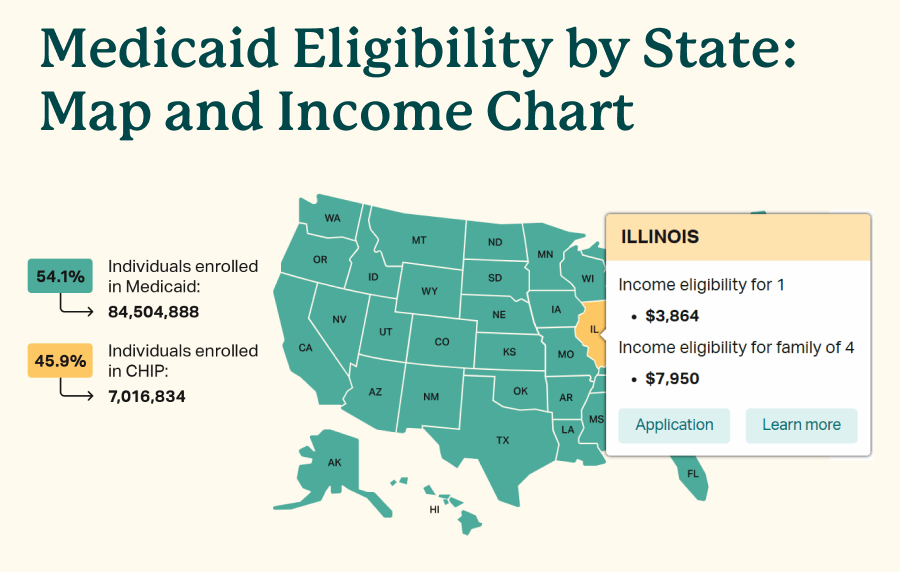
If you plan to use Medicaid, it’s also helpful to understand its asset limits.
In these cases, it may be helpful to speak with financial and estate-planning experts for insight into trusts and wills, as well as how to handle any debts after your departure.
Plan Ahead To Age Safely And Comfortably
Planning ahead gives you control over your home safety, caregiving, and finances, helping you stay independent and comfortable as you age. This includes reviewing insurance options, like life coverage, while you’re still eligible, since some policies have age limits for new enrollment.
The right senior life insurance plan through Choice Mutual can protect you from unexpected medical or long-term care costs and help you stay on track with your plans.
- Nationally licensed life insurance agent with over 16 years of experience.
- Personal annual production that puts him in the top .001% out of all life insurance agents in the nation.
Anthony Martin is a nationally licensed insurance expert with over 16 years of experience and has personally served over 10,000 clients with their life insurance needs. He frequently authors entrepreneurial and life insurance content for Forbes, Inc.com, Newsweek, Kiplinger, and Entreprenuer.com. Anthony has been consulted as an expert life insurance source for dozens of high-profile websites such as Forbes, Bankrate, Reuters, Fox Business, CNBC, Investopedia, Insurance.com, Yahoo Finance, and many more.
Choice Mutual often cites third-party websites to provide context and verification for specific claims made in our work. We only link to authoritative websites that provide accurate information. You can learn more about our editorial standards, which guide our mission of delivering factual and impartial content.
-
Source. https://www.ncbi.nlm.nih.gov/pmc/articles/PMC3209521/#R10
-
Source. https://www.ahcancal.org/Assisted-Living/Facts-and-Figures/Pages/default.aspx
-
Source. https://journals.sagepub.com/doi/10.1177/0733464817748779
-
Source. https://www.ncbi.nlm.nih.gov/pmc/articles/PMC9982397/
-
Source. https://milkeninstitute.org/article/pandemic-stress-testing-aging-place
-
Source. https://www.aarp.org/home-family/your-home/info-2021/home-and-community-preferences-survey.html
-
Source. https://www.commonwealthfund.org/publications/surveys/2021/sep/impact-covid-19-older-adults
-
Source. https://www.commonwealthfund.org/publications/surveys/2021/sep/impact-covid-19-older-adults
-
Source. https://www.aarp.org/home-family/your-home/info-2021/home-and-community-preferences-survey.html
-
Source. https://www.aplaceformom.com/caregiver-resources/articles/caregiver-statistics
-
Source. https://www.aplaceformom.com/caregiver-resources/articles/caregiver-statistics
-
Source. https://www.apa.org/pi/aging/resources/guides/older
-
Source. https://www.healthaffairs.org/doi/10.1377/hlthaff.2020.01470
-
Source. https://www.irs.gov/publications/p502#en_US_2022_publink1000178902
-
Source. https://www.healthyagingpoll.org/reports-more/report/older-adults-preparedness-age-place
-
Source. https://homehealthcarenews.com/2016/10/3-myths-holding-back-aging-in-place/
-
Source. https://homehealthcarenews.com/2016/10/3-myths-holding-back-aging-in-place/
-
Source. https://www.healthyagingpoll.org/reports-more/report/older-adults-preparedness-age-place
-
Source. https://www.healthyagingpoll.org/reports-more/report/older-adults-preparedness-age-place
-
Source. https://www.healthyagingpoll.org/reports-more/report/older-adults-preparedness-age-place
-
Source. https://www.healthyagingpoll.org/reports-more/report/older-adults-preparedness-age-place
-
Source. https://www.healthyagingpoll.org/reports-more/report/older-adults-preparedness-age-place
-
Source. https://www.healthyagingpoll.org/reports-more/report/older-adults-preparedness-age-place
-
Source. https://www.healthyagingpoll.org/reports-more/report/older-adults-preparedness-age-place
-
Source. https://www.healthyagingpoll.org/reports-more/report/older-adults-preparedness-age-place
-
Source. https://www.aarp.org/home-family/your-home/info-2021/home-and-community-preferences-survey.html
-
National Institute of Health. https://www.ncbi.nlm.nih.gov/pmc/articles/PMC3209521/#R10
-
The Commonwealth Fund. https://www.commonwealthfund.org/publications/surveys/2021/sep/impact-covid-19-older-adults
-
AHCANCAL.org. https://www.ahcancal.org/Assisted-Living/Facts-and-Figures/Pages/default.aspx
-
APA.org. https://www.apa.org/pi/aging/resources/guides/older
-
HealthAffairs.org. https://www.healthaffairs.org/doi/10.1377/hlthaff.2020.01470
-
Journal of Applied Gerontology. https://journals.sagepub.com/doi/10.1177/0733464817748779
-
A Place for Mom. https://www.aplaceformom.com/caregiver-resources/articles/caregiver-statistics
-
Home Health Care News. https://homehealthcarenews.com/2016/10/3-myths-holding-back-aging-in-place/
-
IRS. https://www.irs.gov/publications/p502#en_US_2022_publink1000178902
-
HealthyAgingPoll.org. https://www.healthyagingpoll.org/reports-more/report/older-adults-preparedness-age-place
-
NIH (COVID-19). https://www.ncbi.nlm.nih.gov/pmc/articles/PMC9982397/
-
Milken Institute. https://milkeninstitute.org/article/pandemic-stress-testing-aging-place
-
Source. https://www.aag.com/home-survey/
-
Source. https://www.aag.com/home-survey/
-
Source. https://aginginplace.org/aging-in-place-vs-assisted-living/
-
Source. https://aginginplace.org/aging-in-place-vs-assisted-living/
-
18% of adults 50 and older. https://ihpi.umich.edu/national-poll-healthy-aging/national-findings/long-term-care-are-older-adults-ready
-
Source. https://www.census.gov/library/stories/2020/06/old-housing-new-needs.html
-
Source. https://aginginplace.org/aging-in-place-vs-assisted-living/