Main Findings
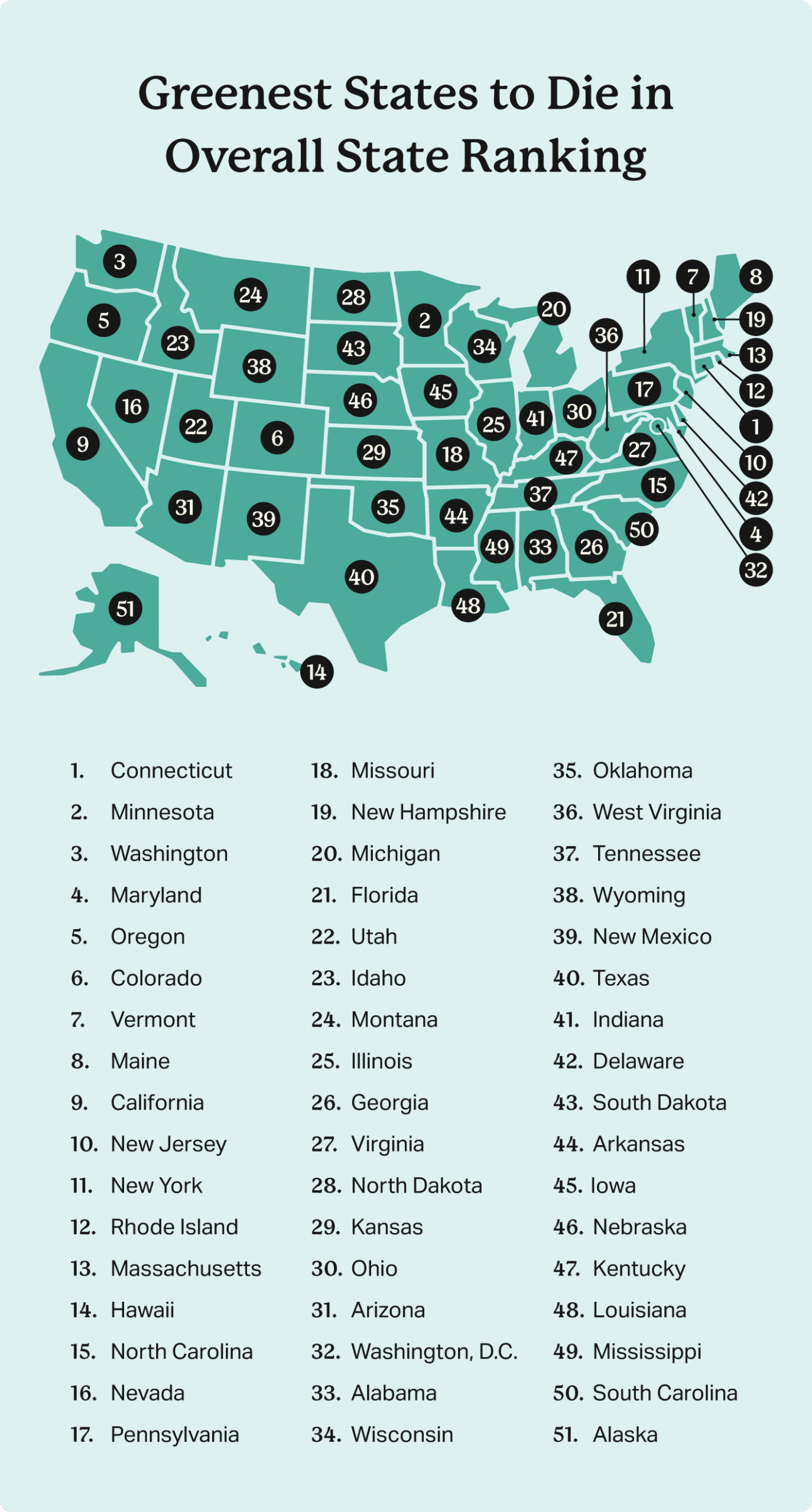
We ranked each U.S. state based on two categories: local emissions impacts from cremations and traditional burials, and the accessibility of sustainable burial services per 100,000 people ages 65 and older.
Accessibility includes:
- If aquamation is legal and the number of facilities per capita
- If body composting is legal and the number of facilities per capita
- Green Burial Council-certified funeral homes and green cemeteries per capita
We found that Connecticut is the top state in the U.S. for green burial options for a few reasons. While it’s only in the top 20 states for emissions, Connecticut has good access to sustainable burial services, such as aquamation, green funerals, and green cemeteries, despite its small size. Minnesota, Washington, Maryland, and Oregon round out our list of the top five states.
Our bottom state is Alaska, which ranked low due to its relatively high emissions rate and almost no laws allowing green burial practices.
See the chart below the map to see how your state ranks:
Emissions Impact
The first factor we considered was the current per-capita emissions associated with people’s burial decisions (see methodology).
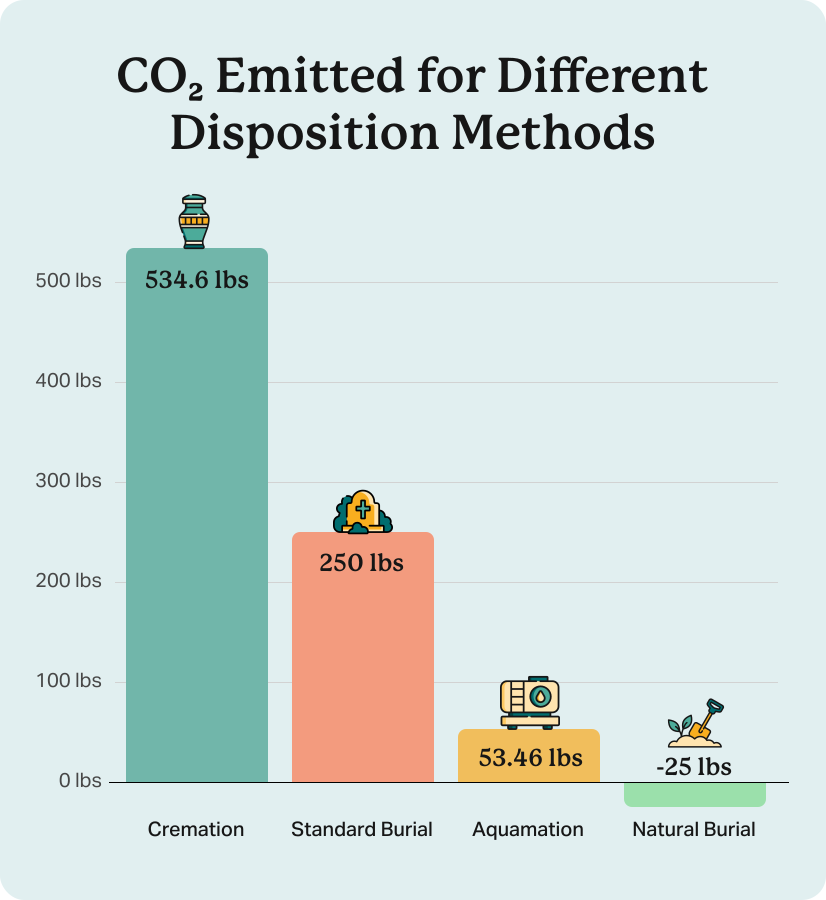
Cremation and standard burial accounted for approximately 95% of people’s burial decisions in 2025, according to the National Funeral Directors Association, and those decisions have an impact on a state’s overall CO2 emissions.
The following graphic compares CO2 emissions per cremation and per standard burial, as well as leading sustainable alternatives.
Current Accessibility Of Sustainable Alternatives
There are a few different ways someone can have a natural burial. The most popular method is natural organic reduction, also known as human composting: 21% of people say that’s their preferred alternative burial option. Other relatively common options include green burials (20%) and tree pod burials (18%).
However, not all these options are legal, and even in states where they are, facilities offering the services may not yet exist or be accessible to everyone. Here’s a look at popular options and their status nationwide.
Aquamation
Aquamation is slowly growing in popularity as an alternative to flame cremation. The process, officially called alkaline hydrolysis, is also commonly referred to as flameless cremation, bio-cremation, green cremation, or water cremation.
Up until this point, aquamation has primarily been used to dispose of animal remains and is not widely legal for human use.
However, due to its lower environmental impact (about 10% of the emissions of flame cremation), some states have begun legalizing the process for human remains.
The majority of states where aquamation is legal have only legalized it within the past decade.
Here is the current status of aquamation legality across the nation:
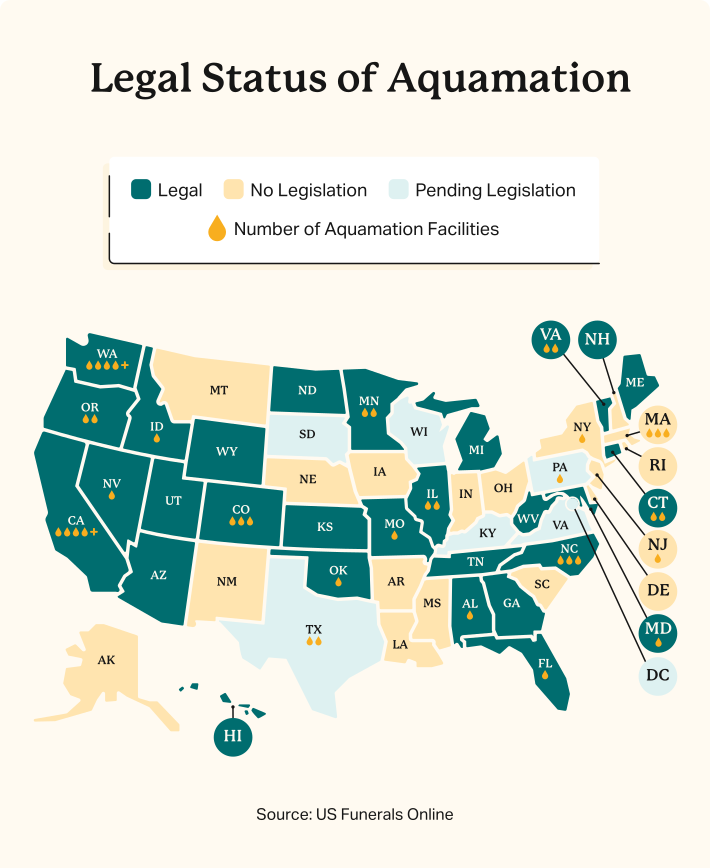
Since many states have legalized the process only in the past few years, some that have legalized it still have no aquamation facilities available to provide the service.
As awareness of sustainable burial options likely increases over time, with subsequent generations and more states legalizing the process, the availability of aquamation facilities is likely to increase in the coming years.
Body composting
Body composting, also known as natural organic reduction, is a process of body decomposition that generates usable, nutrient-dense soil.
Body composting is a more recent phenomenon than aquamation, with Washington state being the first to legalize the process in 2019.
Here is the current status of body composting legality across the nation:
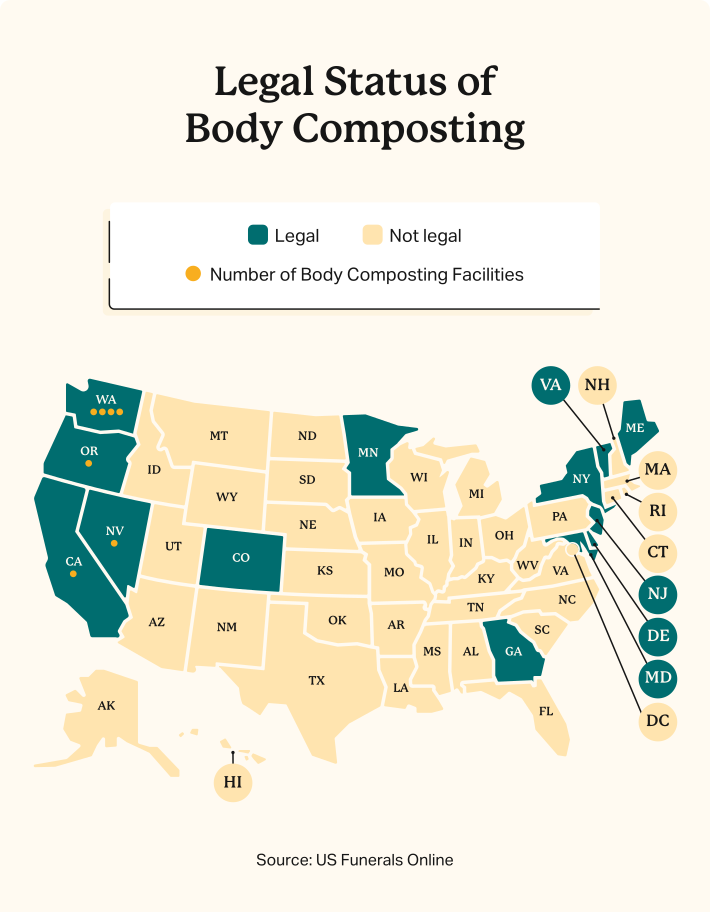
While the availability of body composting is currently limited in the United States, it’s growing in popularity, and several additional states have introduced legislation to legalize it.
Natural burial
Natural burial is the most widely understood and accessible sustainable burial option, as it is legal in every US state.
Instead of being embalmed and put into a casket that is placed in a concrete burial vault, the body is placed directly into the ground, where it can naturally decompose.
Bodies are either wrapped in a simple cotton shroud or a biodegradable casket, such as a wicker or natural wooden casket.
As more people begin to prefer natural burials, it seems likely that this trend will continue.
Natural burial grounds
While natural burial is legal in every state, not all cemeteries can accommodate it, as many local and state regulations govern how bodies are interred.
There are three types of cemeteries that can accommodate natural burial:
- Natural burial cemeteries: Where the entire cemetery is devoted to natural burial.
- Conservation cemeteries: Where bodies are interred in a site that is actively seeking to restore and conserve the local environment.
- Hybrid cemeteries: Traditional cemeteries with designated areas for natural burials.
Green Burial Council Certified Funeral Homes
For most people, funeral homes are an important resource for planning and arranging a funeral. Most people turn to local funeral homes, many of which might not offer or advertise sustainable burial alternatives.
The Green Burial Council (GBC), the leading nonprofit organization advocating and educating people on sustainable burial practices, compiled a list of providers on their site that meet their certifications for green burials. This list was used in our state-by-state assessment of funeral home providers offering green services (see methodology).
According to Gretchen Spletzer of GBC, to become GBC certified, a funeral home must meet seven main standards, which mainly surround how prominently a funeral home features green burial services. Three of these standards relate to the funeral home’s website.
A funeral home must present natural burial the same way it might present more conventional options, such as standard burial or cremation. Natural burial options and pricing cannot be hard to find on the site, and burial products, such as shrouds and caskets, must be available for purchase.
It is important to note that the GBC-certified funeral homes do not necessarily include all funeral homes that might offer sustainable burial alternatives.
However, it might be more difficult to find natural burial options, and you might not be able to access all the products and services you need. Just because your funeral home isn’t on this list, natural burial may be available – be sure to check with each home you consider to verify. The cost of green burials is typically much less than a traditional burial service.
Methodology
To create our state ranking, we considered multiple factors related to existing burial practices and the availability of sustainable alternatives. These factors were assigned the following weights:
Emissions Impact (25 total):
- Per capita emissions from cremation – 12.5
- Per capita emissions from traditional burial – 12.5
Sustainable Burial Services Access (75 total):
- If aquamation was legal or not – 12.5
- Aquamation facilities per capita (of those 65+) – 12.5
- If body composting was legal or not -12.5
- Body composting facilities per capita (of those 65+) – 12.5
- Green Burial Council certified funeral homes per capita (of those 65+) – 12.5
- Green cemeteries per capita (of those 65+) – 12.5
The data used to calculate per capita emissions were obtained from the 2025 NFDA Cremation & Burial Report. All per capita calculations were done using 2024 U.S. Census data.
While interest in sustainable alternatives tends to be concentrated among younger generations, we chose to evaluate the accessibility of sustainable burial options for the 65+ population per capita rather than the general population, as this group is more likely to be currently involved in end-of-life planning.
We wanted this report to reflect the current state of sustainable burial options, with the 65+ population making these decisions.
Hopefully, as more states legalize aquamation and body composting and create more green burial grounds, the number of options will increase to accommodate younger generations, who are more likely to desire sustainable burials.
- Nationally licensed life insurance agent with over 16 years of experience.
- Personal annual production that puts him in the top .001% out of all life insurance agents in the nation.
Anthony Martin is a nationally licensed insurance expert with over 16 years of experience and has personally served over 10,000 clients with their life insurance needs. He frequently authors entrepreneurial and life insurance content for Forbes, Inc.com, Newsweek, Kiplinger, and Entreprenuer.com. Anthony has been consulted as an expert life insurance source for dozens of high-profile websites such as Forbes, Bankrate, Reuters, Fox Business, CNBC, Investopedia, Insurance.com, Yahoo Finance, and many more.
Choice Mutual often cites third-party websites to provide context and verification for specific claims made in our work. We only link to authoritative websites that provide accurate information. You can learn more about our editorial standards, which guide our mission of delivering factual and impartial content.
-
Emissions data for cremation and aquamation. https://www.nationalgeographic.com/science/article/is-cremation-environmentally-friendly-heres-the-science
-
Green Burial Council. https://www.greenburialcouncil.org/
-
about 10% of the emissions of flame cremation. https://www.nationalgeographic.com/science/article/is-cremation-environmentally-friendly-heres-the-science
-
aquamation legality across the nation. https://www.us-funerals.com/where-is-aquamation-legal-which-states-have-legalized-aquamation-or-bio-cremation/#.ZAZNS-zML0p
-
with Washington state being the first to legalize the process in 2019. https://www.seattletimes.com/seattle-news/washington-becomes-first-state-to-legalize-human-composting/
-
Green Burial Council. https://www.greenburialcouncil.org/
-
Aquamation facilities. https://www.us-funerals.com/where-is-aquamation-legal-which-states-have-legalized-aquamation-or-bio-cremation/#.ZAZNS-zML0p
-
Green Burial Council certified funeral homes. https://www.greenburialcouncil.org/
-
Gretchen Spletzer of GBC. https://www.greenburialcouncil.org/our-team/
-
the National Funeral Directors Association. https://www.nfda.org/media-center/
-
2025 NFDA Cremation & Burial Report. https://archive.legmt.gov/content/Committees/Interim/2025-2026/EAIC/January_20_2026/2025_NFDA_Cremation_And_Burial_Report.pdf
-
2024 U.S. Census data. https://data.census.gov/table/ACSST1Y2024.S0101