Key Findings
Money worries don’t really go away with age – if anything, they echo louder
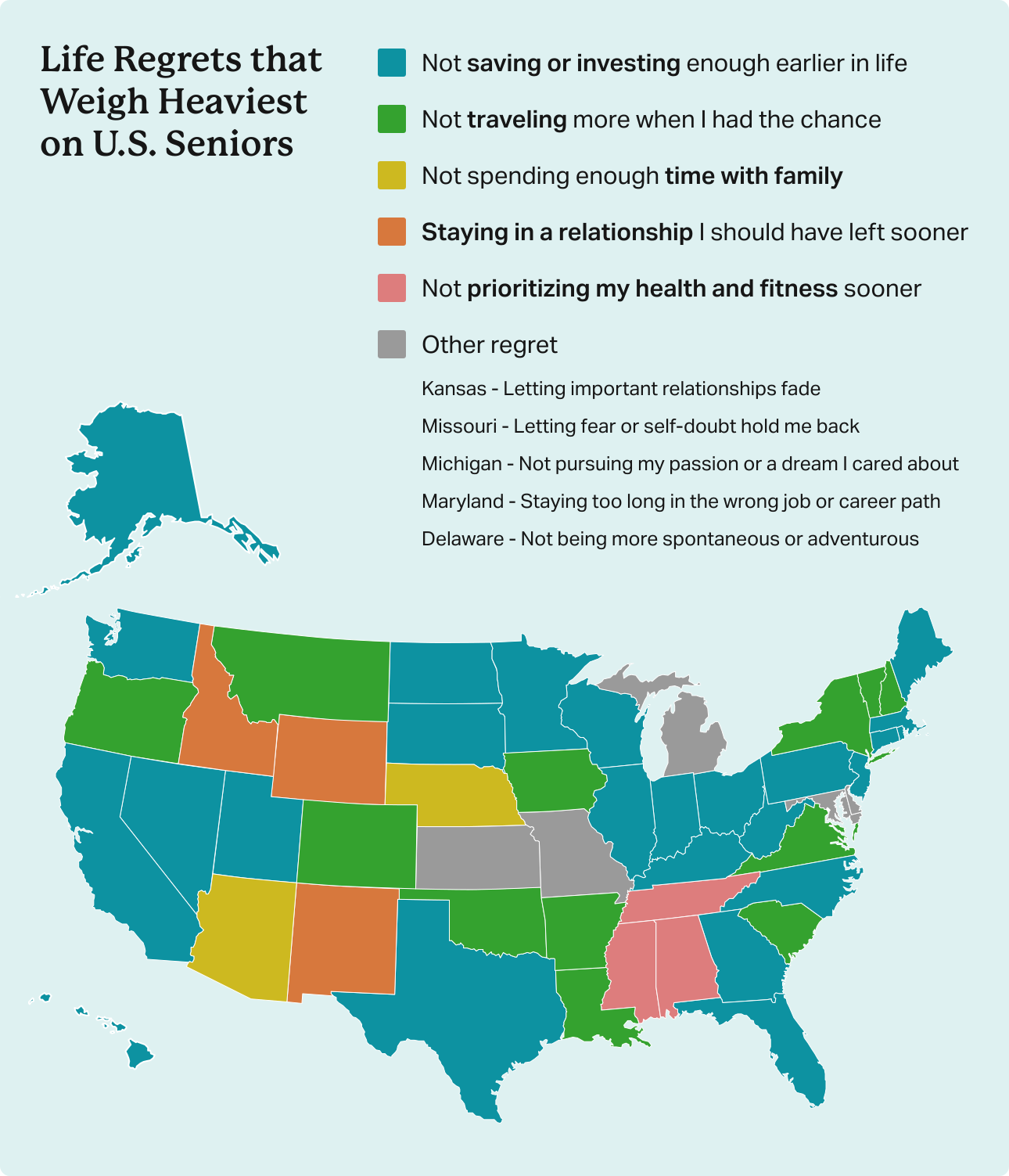
A huge chunk of respondents pointed to not saving or investing early enough, and it wasn’t said in a doom-and-gloom way, more a kind of tired “I wish someone had shaken me in my 20s.”
It tied closely to another theme: many people assumed retirement would magically sort itself out. Spoiler: it doesn’t.
Travel regret is everywhere
Not in the glossy “I should’ve backpacked Asia” way, but in small, very human moments-putting off a trip to see a friend, skipping the family holiday, or waiting for “the right time,” which never turned up.
The interesting twist is that travel also tops the list of things people still want to do, meaning that particular regret hasn’t hardened into defeat.
Health regret feels almost universal
People wished they had paid attention to the tiny warning signs. Several mentioned ignoring their bodies for decades because life was busy or because feeling “invincible” was easier.
It also matches the finding that more than half say regret affects their mental well-being – physical and emotional neglect seem to travel together.
A surprising number regretted not being more spontaneous
Not moving cities when they had the chance, not taking a random opportunity, or just failing to say yes when life handed them something unexpected.
It connects with the regret about overworking – many feel they spent years being “sensible” when a little irrational fun wouldn’t have hurt.
Communication misfires haunt people
Tough conversations avoided, apologies never made, amends never attempted – these showed up a lot. And they often link to the bigger relationship regrets.
Despite all these regrets, seniors surveyed seem surprisingly hopeful.
Over two-thirds said they believe it is never too late to do things they have always wanted.
Final Thoughts
What’s striking is how ordinary these regrets are. They aren’t dramatic “movie moments” – they are the small decisions that went the wrong way a few too many times. And that’s probably why they sting: they were avoidable.
But the biggest takeaway is that almost everything that seniors regret can still be reversed. Friendships can be reconnected; it’s never too late to hit the gym or learn a new skill, and finances can be brought under control.
Regret may look backward, but it points forward more than people think.
Methodology
This study is based on a survey of 2,000 Americans aged 65 and over, conducted across the United States in March 2026. Respondents were asked to identify what they consider their biggest life regret, selecting from a range of personal, financial, career, and relationship-related factors, or providing their own response where applicable.
The survey was conducted online using a nationally representative panel of adults aged 65+, balanced by gender, household income, and geographic region to reflect the U.S. senior population.
Results were weighted where necessary to align with national population benchmarks, ensuring a broad and representative snapshot of reflections and experiences among older Americans across all 50 states. March 2026.
- Nationally licensed life insurance agent with over 16 years of experience.
- Personal annual production that puts him in the top .001% out of all life insurance agents in the nation.
Anthony Martin is a nationally licensed insurance expert with over 16 years of experience and has personally served over 10,000 clients with their life insurance needs. He frequently authors entrepreneurial and life insurance content for Forbes, Inc.com, Newsweek, Kiplinger, and Entreprenuer.com. Anthony has been consulted as an expert life insurance source for dozens of high-profile websites such as Forbes, Bankrate, Reuters, Fox Business, CNBC, Investopedia, Insurance.com, Yahoo Finance, and many more.